

Nazionalità: ITA
Durata: 110 min.
Sceneggiatura: Sergio Citti, Pier Paolo Pasolini
Fotografia: Tonino Delli Colli
Effetti:
Musiche: Antonio Vivaldi (adattato da Carlo Rustichelli)
Cast:
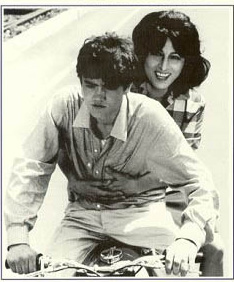
Anna Magnani (Mamma Roma), Ettore Garofalo (Ettore), Franco Citti (Carmine), Silvana Corsini (Bruna), Luisa Loiano (Biancofiore), Paolo Volponi (il prete), Lamberto Maggiorani (un malato).
Note/Curiosità:
Il restauro: Il negativo originale del film era in pessime condizioni e diverse inquadrature erano mancanti. Grazie al Fondo Pasolini, alla Cineteca Nazionale e al magazzino Mediaset, sono state reperite buona parte di esse, mentre quelle andate perdute sono state ricavate dalla stampa di un lavander (copia di protezione del film) dal quale, grazie a ralenti e ingrandimenti, sono stati ricavati i fotogrammi distrutti. Il bisogno di rendere uniformi qualità e luce dei due materiali, ha reso necessario che Vincenzo Verzini - specialista dei restauri in bianco e nero - ottenesse la giusta qualità attraverso una lunga serie di esperimenti di stampe diverse di un vecchio lavander trovato fortunosamente nell’archivio di uno stabilimento. Alla fine di questo procedimento, la pellicola è stata visionata e approvata dal direttore della fotografia, Tonino Delli Colli.
Anche il suono della pellicola è stato oggetto di un accurato restauro: trascritto su un dat, è stato filtrato e migliorato grazie ad appositi software di computer specializzati nel trattamento del sonoro.
The restoration: The original negative of the film was in a terrible condition, with some frames completely missing. Thanks to the Fondo Pasolini, the Cineteca Nazionale and Mediaset’s archives, the majority of these were subsequently found, while those that were entirely lost were recovered from the print of a lavander by slowing-down and enlarging the relative frames. The need to make sure that the quality and light of the two different film sources were exactly the same, entailed Vincenzo Verzini - an expert in the restoration of black and white film - carrying out a long series of different print experiments on an old lavander that had fortuitously been found in a film archive. At the end of these experiments, the resulting film was then shown to the director of photography, Tonino Delli Colli.
The film’s soundtrack was also painstakingly restored by transferring to dat where, with the aid of special computer software used for treating sound, it was filtered and greatly improved.
The film’s soundtrack was also painstakingly restored by transferring to dat where, with the aid of special computer software used for treating sound, it was filtered and greatly improved.
The film’s soundtrack was also painstakingly restored by transferring to dat where, with the aid of special computer software used for treating sound, it was filtered and greatly improved.
The film’s soundtrack was also painstakingly restored by transferring to dat where, with the aid of special computer software used for treating sound, it was filtered and greatly improved.
"Sullo sfondo di un acquedotto incrostato di casupole e tuguri, questi ruderi alzano le forme sopravvissute: sogni di archi, ricordi di volte, briciole di arcate": così Pasolini descriveva in sceneggiatura uno degli scorci ricorrenti del suo secondo film che, non meno del primo (Accattone), doveva provocare accesi scontri e polemiche. Lo stesso scrittore e regista fu aggredito da un giovane neofascista nell'atrio del cinema romano dove il film veniva proiettato, ma già alla presentazione del film alla Mostra di Venezia, il film era stato oggetto di denuncia, in quanto "Offensivo del comune senso della morale". L'intento di Pasolini era esattamente l'opposto: mostrare a chiunque la tragedia storica, quasi biologica, per la quale ogni sottoproletario che voglia elevarsi al di sopra del proprio mondo, come il figlio della prostituta protagonista, finisca inevitabilmente per distruggersi e incontrare la morte. In una borgata bruciata dal sole, le figure del film si muovono come personaggi di una rappresentazione sacra, come volti e corpi di Giotto e Masaccio.
Nato su suggestione della stessa Magnani, che dopo aver visto Accattonefece sapere al regista di tener molto a lavorare in un film con lui (l'attrice aveva rifiutato qualsiasi sceneggiatura da più di due anni), si apre con la bellissima sequenza della gara delle strofe al matrimonio e quasi si chiude su una scena di passione, col protagonista deposto come in una crocifissione del Mantegna.
"In the background of an aqueduct encrusted with shabby little houses and hovels, these ruins rise up in the form of the survivors: the remnants of arches, the memories of roofs and the discarded crumbs of arcades." This is how Pasolini described one of the sets frequently seen in his second film which, like the first (Accattone), provoked heated discussions and arguments. The director himself was attacked by a young neo-fascist in the foyer of the Rome cinema where the film was being shown, while it was the subject of an official complaint to the police for being "Offensive to public morality" when it was originally presented at the Venice Festival. However, Pasolini’s intention was the complete opposite since he wanted to show the historical, almost biological, tragedy whereby every member of an underclass who tries to escape from his own world, like the prostitute’s son in the film, inevitably ends up destroying himself and dying. In a town scorched by the sun, the people in the film move like characters in a holy picture, with the faces and bodies of Giotto and Masaccio.
The film was written after a suggestion from Magnani who, after seeing Accattone, made it known to the director that she really wanted to work in one of his films (for two years the actress had refused every script). It opens with the beautiful scene of the verse competition at the wedding, and it closes, more or less, with a scene of passion where the character seems to have been deposited in a crucifixion by Mantegna.